
Thailand Visa Guide: DTV, ED, and Long-Term Expat Visas

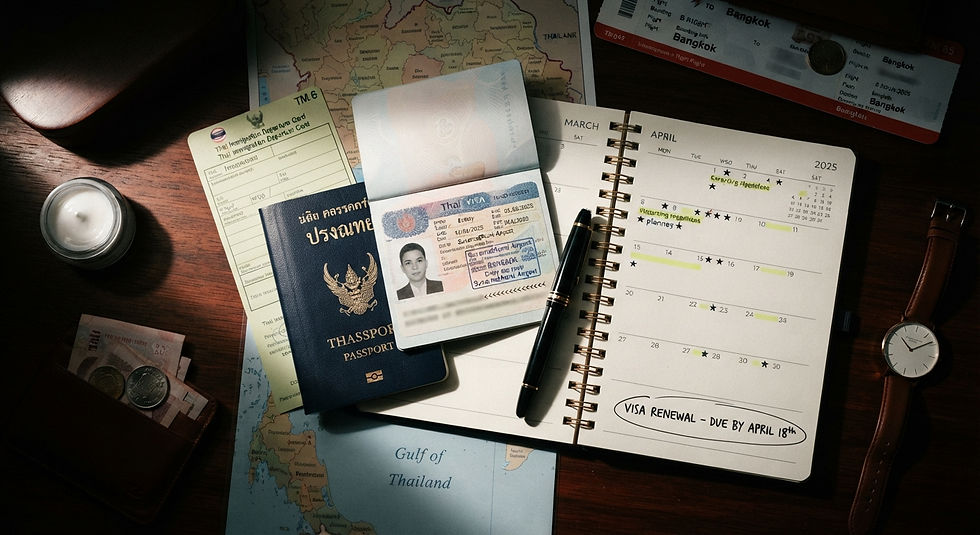
Long-term visa Thailand searches have spiked in recent years as more people look to relocate for remote work, retirement, or a longer stay than a standard tourist visa allows. At the same time, Thai immigration has become significantly stricter about how people actually use these visas. Understanding the legitimate options — and the rules around staying compliant — matters more now than it used to.
Border Runs Are No Longer a Reliable Strategy
For years, "border runs" — leaving Thailand briefly just to re-enter on a fresh tourism stamp — were a common workaround for staying long-term without a proper visa. That era is effectively over. Immigration authorities have tightened enforcement significantly:
A single exit-and-re-entry to reset a stay is still technically legal, but generally only up to twice per calendar year
A third or fourth border run in the same year frequently results in denial of entry, at the discretion of the officer at the border
2026 enforcement data shows tens of thousands of foreigners denied entry and thousands more arrested for overstay or visa misuse in the first half of the year alone
Immigration has specifically flagged patterns like frequent border runs, visa-switching, and long cumulative stays on tourist exemptions as red flags in a traveler's entry history
In short: repeated border runs are now more likely to get you refused entry, or flagged for closer scrutiny, than to quietly extend your stay. Anyone planning to live in Thailand long-term needs an actual visa pathway.
Legitimate Paths for Long-Term Stays
Destination Thailand Visa (DTV) Thailand's newer long-stay option, aimed at remote workers, freelancers, and people pursuing approved cultural or wellness activities (such as Muay Thai training or Thai cooking courses). It's a 5-year multiple-entry visa allowing up to 180 days per entry, extendable once for another 180 days. Applicants generally need at least 500,000 THB held in a personal bank account, often for a minimum period before applying. Importantly, the DTV does not come with a Thai work permit — it doesn't authorize working for Thai companies or clients.
Education (ED) Visa Designed for genuine students enrolled in an accredited Thai institution. This route has come under heavy scrutiny recently, as authorities have cracked down hard on "fake student" ED visas used purely to maintain long-term residency without real study — with hundreds of such visas revoked in 2026 alone. An ED visa only makes sense if you're actually pursuing a legitimate course of study.
Work Visa (Non-Immigrant B) For those with a formal job offer from a Thailand-registered company, paired with a work permit. This remains one of the most stable long-term options, since it's tied to legitimate employment rather than a workaround.
Marriage Visa (Non-Immigrant O) Available to foreign spouses of Thai nationals, subject to financial and documentation requirements. A well-established, stable route for those with a Thai spouse.
Retirement Visa (Non-Immigrant O-A/O-X) For those aged 50 and above, based on financial requirements (savings or monthly income). A long-standing option for retirees, though it doesn't permit any form of work in Thailand.
Thailand Elite Visa A paid membership program offering long-term stays (5 to 20 years depending on tier) without the income or savings documentation required by other visa types. It carries a significant upfront cost but comes with fewer ongoing requirements.
Staying Compliant: Calendar Your Renewal Dates
Whatever visa route you take, the single most important habit is treating renewal deadlines as immovable dates, not flexible ones:
Photograph your entry stamp or "admitted until" date the moment you receive it — this is the only date that legally matters
Build in at least a week of buffer before any deadline, not a day — immigration office queues, closures, and processing delays can eat up slack fast
Most visas allow an extension application at a local immigration office before the stay limit expires; filing even one day late means the office can simply refuse it
Set calendar reminders well ahead of each deadline rather than relying on memory
Overstaying Thai Visa: What's Actually at Stake
Overstay penalties in Thailand are calculated daily — currently around 500 THB per day, capped at 20,000 THB. But the financial fine is often the smallest part of the consequence. Longer or repeated overstays carry real risk of detention, deportation, and multi-year re-entry bans, and immigration's current enforcement posture means these outcomes are being applied more consistently than in past years.
Getting the Right Visa for Your Situation
Given how much enforcement has tightened, it's worth treating visa strategy as something to plan properly from the outset — rather than improvising once you're already in the country. If you're weighing which path fits your situation and want to talk through how that connects to housing and neighborhoods that suit your visa timeline, our team is happy to help.
This guide is for general informational purposes and isn't a substitute for advice from a licensed immigration lawyer — visa rules in Thailand change frequently, so always confirm current requirements directly with Thai Immigration or a qualified visa consultant before applying.


Comments